 |
Systematic, step-by-step guidance for adult beginners and late-starters. Learn the Way of the Sword with 45+ years of traditional experience. |
- Home
- Level 1: Kendo Guide for Complete Beginners
- Shizentai: Natural Posture
Shizentai:
It is not quite Natural posture.
Shizentai means "natural posture". However, it is not your ordinary posture.
You must learn the natural posture in order to stand naturally. Yes. Very complicated but you will get used to the posture.
The key points are;
- to straighten the back of your neck,
- to pull your chin in,
- to tighten the butt cheeks.
It does not sound like a natural posture. Very uncomfortable for the first time you try.
You know there is a difference between being relaxed and being lazy.
We do not want to be lazy. We need to make an effort to maintain your posture but you can still be relaxed.
That is what we want. Now, this is how we create this natural posture.
Upper body:
1. lift your shoulders
2. bring your shoulders back (it feels like your shoulder blades meet at the back)
3. drop your shoulders.
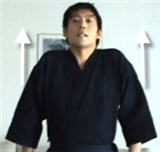 Front
Front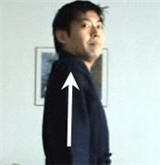 Side
Side
This naturally sticks your chest out so that your shoulders will not roll
forwards.
4. keep your chin in but not too much.
5. keep the back of your neck straight.
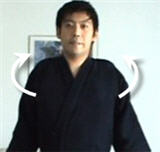 Front
Front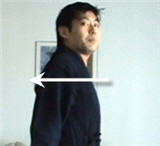 Side
Side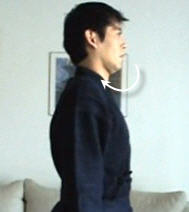 Keep Your Chin In
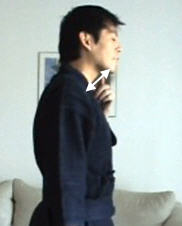 Bad Example: Chin Sticks Out
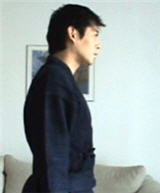 Bad Posture: Shoulders Roll In
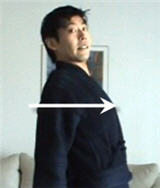 Bad Posture: Chest Sticks Out
Lower body:
1. tighten your buttocks
2. heels together and toes apart (45 degrees between toes)
 Feet Position: 45 degrees apart
When you tighten your buttocks, probably you feel the abs and the hamstrings
tightened too.
You feel taller.
Now I know it feels weird but you will get used to it. In other words,
do it until it becomes "natural".

"Kendo Guide for Beginners" and "Kendo Guide for Complete Beginners" are available. "Kendo Guide for Beginners" is designed to help those who already go to a dojo. "Kendo Guide for Complete Beginners" is designed to give you an even better understanding in kendo. The latter has more detailed videos available.
This lesson is part of Level 1: Kendo Guide for Complete Beginners.
Back to Level 1: Complete Beginners