You Got It!
Your Review of "Shiai to discipline the human character"
by Santiago B Tejada
(United States)
In you recent review of "Shiai to discipline the human character" in the section "Hit Vs. Cut" you made reference to "the importance of the direction of the blade". Here on this one I wonder why we have opted for making it more complicated by using shinai with rounded tsuka rather than an "oval" one.
It would appear to be one contradiction that, while shinai is to resemble a real sword, its tsuka sectional form does not have the same sectional form as the actual sword it represents. There are shinai with oval handle or tsuka in the market. We see them in many vendors’ websites.
Why fight what should be the natural way? An oval tsuka should apparently make it easier for a kendoka to maintain proper cut angle and for shimpan to have a lesser degree of difficulty to judge it.
Answer: Thank you for your post. That is a very good point. We all are familiar with the concept and purposes of kendo that International Kendo Federation (FIK) provides. That is why we make a great deal out of the direction of the blade (shinai).
I totally agree with you about the oval tsuka. It makes things easier for competitors and shimpan. It will also help beginners to grasp the idea of “katana” way better than a shinai with a round tsuka. It really helps to learn a good kendo. As a learning tool, the oval tsuka is very useful.
But it is not the main issue. The issue is the attitude and vision of the competitors. People tend to go after points so it does not matter if the tsuka is round or oval, people are just trying to HIT the targets.
For example, hira-uchi (strikes with the side of the shinai) is a big problem in kendo. This happens especially when a kendoist try to hit a kote or a do. Especially debana-kote is hard to tell if one is using the blade properly or not. Any do strikes can be very hard to see the angle of the blade.
These strikes can be hira-uchi with any shinai. It is up to the user of shinai. That is why it is very important for kendo practitioners and shimpan to recognise the importance of the angle of the blade and the concept and purposes of kendo.
Click here to read or post comments

About Hiro
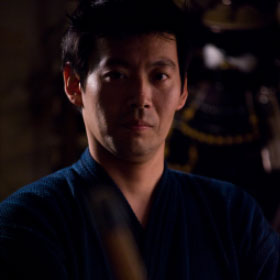
Kendo is fun! Kendo is enjoyable! Adults beginners and late starters of kendo have hard time to understand that. If you are one of them, I want to help you with learning kendo and share the enjoyment and joy of kendo! Click here to know about me and Kendo-Guide.Com.
Search Your Topic
Newsletter
Would you like to subscribe to the Kendo-Guide.Com Newsletter to receive updates and exclusive videos only available for subscribers and patrons. Click here to find out more about the newsletter or click the orange button below to subscribe right now.
Privacy Policy | Disclaimer and Terms of Use | COMPENSATION AND AFFILIATION AFFIDAVIT | Contact.