Need Kendo Instructions?
You Got It!
You Got It!
Different Bowing Methods During Training
When do I do a standing bow during an exercise with motodashi and how?
We line up in front of a motosdashi and we wait for our turn to practice with him.
Can I just slightly bow with shinai in my hands by tilting the tip to the ground at right before I start the exercise with him and at the end?
It is correct or I must do ritsu rei with shinaï at the end of each exercise?
If, I change partner which bow I must use?
I don't know which manners I must use (bow with or without sonkyo) when I do a specific exercise with a partner.
I started just one month ago.
Answer: This is a good question and unfortunately there is no right answer for this. Each dojo has its own way.
I will tell you what I would do. Let’s say that from the very beginning of training, we have one line of motodachi and several kakarite (strikers) line up in front of each motodachi.
M: motodachi, K: Kakarite
So it looks like this.
M M M M M
K K K K K
K K K K K
K K K K K
K K K K K
K K K K K
We all bow in, take three steps forwards and sit in sonkyo. But all the kakarite cannot have their shinai touching the motodachi’s shinai.
So without hitting the person in front, take chudan and sit in sonkyo. Ideally, shinai points at motodachi. But if the dojo is not wide enough, you may have to have your shinai slightly to the right or left.
After sonkyou, except the first kakarite, the other kakarite put their sword back to the sage-to position and walk backwards to give some space to the first kakarite.
The same thing at the very end of the training.
Now during the training, most of the time we skip sonkyo part since it is time consuming and it is not necessary because we did it already at the beginning.
As you say, some just lower their sword diagonally to the right (kamae wo toku) and bow. This is common for motodachi since motodachi keeps receiving kakarite continuously.
Kakarite on the other hand, has time to take chudan, put their sword back to the taito position. And then lower the sword in the sage-to position. And bow.
This is what I would do.
Please ask me again if you cannot picture my explanation. It is quite hard to explain in writing.
Click here to read or post comments

About Hiro
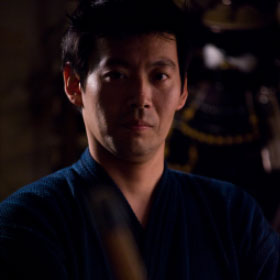
Kendo is fun! Kendo is enjoyable! Adults beginners and late starters of kendo have hard time to understand that. If you are one of them, I want to help you with learning kendo and share the enjoyment and joy of kendo! Click here to know about me and Kendo-Guide.Com.
Search Your Topic
Newsletter
Would you like to subscribe to the Kendo-Guide.Com Newsletter to receive updates and exclusive videos only available for subscribers and patrons. Click here to find out more about the newsletter or click the orange button below to subscribe right now.
Privacy Policy | Disclaimer and Terms of Use | COMPENSATION AND AFFILIATION AFFIDAVIT | Contact.